

The Complete Guide to Construction Site Power in Zimbabwe.. Construction Site Power Zimbabwe | Complete Guide | Volt Wagon


Power is one of the first practical problems that needs to be solved on a construction site.
The building may not have electricity yet. Permanent infrastructure may still be months away. The work may be taking place in a remote area, or the part of the site that needs power may keep changing as construction progresses.
Yet contractors still need electricity to keep work moving.
Power tools need to run. Site offices may need electricity. Security systems and lighting may need to operate after the workforce leaves. Mobile workshops, survey equipment and other electrical equipment may all form part of the project.
For construction companies in Zimbabwe, the question is therefore not simply where to find electricity.
Construction Site Power Zimbabwe | Complete Guide | Volt Wagon
It is:
What is the most practical way to power the site at each stage of the project?
That could mean grid electricity, a generator, solar and battery storage, a mobile power system, or a combination of several power sources.
This guide looks at the options.

Why Temporary Power Matters on Zimbabwean Construction Sites
Zimbabwe's construction sector covers an enormous range of work, from housing and commercial buildings to roads, dams, mining projects and other civil engineering works. CIFOZ's contractor classifications similarly span building, civil engineering, electrical contracting, specialist services and equipment suppliers.
And there is significant infrastructure activity underway.
In September 2026, Government reiterated its intention to increase the involvement of Zimbabwean contractors in major infrastructure projects, including roads, while the country's housing programme is targeting at least one million housing units by 2030.
Whether the project is large or small, electricity can be required well before permanent power is available.
That makes temporary power an important part of construction planning.

What Needs Electricity on a Construction Site?
Before deciding how to power a construction site, start by identifying what actually needs electricity.
Depending on the project, requirements could include:
Power tools
Mobile workshops
Site offices
Site and security lighting
Compatible surveillance and security equipment
Survey equipment
Suitable equipment used during concrete works
Other temporary electrical loads
Not all of these operate in the same way.
Some equipment may run continuously. Other equipment may only be switched on for a few minutes at a time.
This distinction becomes important when choosing the power source.

Option 1: Permanent or Grid Electricity
Where a suitable grid connection is already available, it may be the obvious source of construction power.
The challenge comes when permanent electricity has not yet reached the project.
A new development may require power during earthworks, foundations and structural construction long before the finished property's electrical connection is commissioned.
There is also another consideration on larger sites: where the electricity is needed can change.
A fixed supply point may be convenient for one stage of construction and inconvenient for another.
This is where temporary and mobile power options become relevant.

Option 2: Generator Power
Generators have been used on construction sites for decades, and for good reason.
They are mobile, familiar to contractors and capable of providing substantial power when correctly sized for the equipment being operated.
There are, however, operating considerations.
A generator requires fuel. It has an engine that requires routine servicing and maintenance. It produces noise and exhaust while operating.
There is also the question of how frequently electricity is actually being used.
A construction team may use a power tool, stop, reposition, complete another task and then require electricity again.
If a generator remains running simply to keep electricity available between those jobs, it continues operating even when the tools themselves are not being used.
That does not make generators a bad solution. It simply means contractors should consider the type of electrical load when choosing how to power a site.

Option 3: Fixed Solar and Battery Power
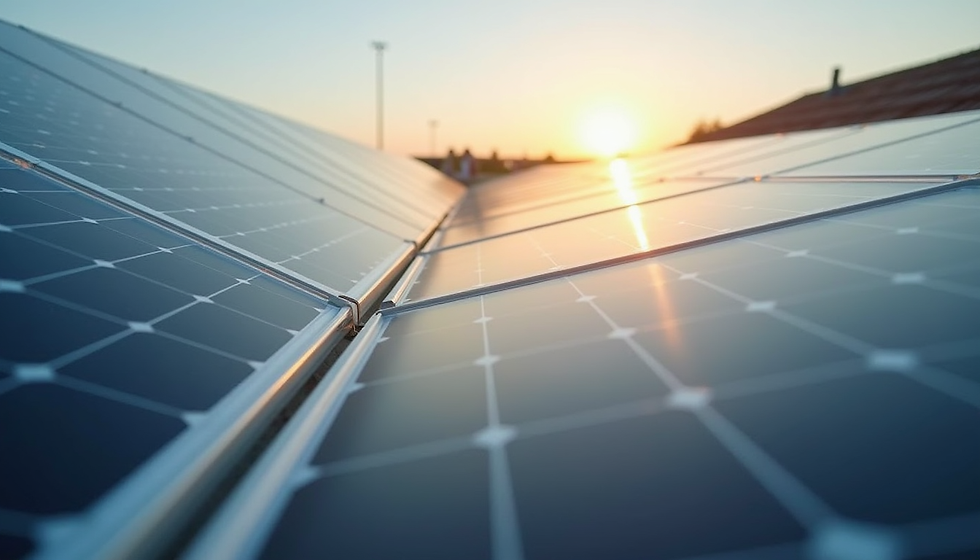
Solar panels combined with an inverter and battery storage provide another option.
During suitable conditions, solar panels generate electricity while batteries allow energy to be stored for later use.
This can work well where power is required regularly at one location.
The question for a construction company is what happens when that particular project finishes.
A permanent solar installation belongs to that location.
For a developer constructing their own permanent premises, that may make perfect sense.
For a contractor moving from project to project, a mobile system can offer a different approach.

Option 4: Mobile Solar and Battery Power
Instead of permanently installing the power system, solar panels, batteries and an inverter can be incorporated into a mobile unit.
This turns the power source into a piece of construction equipment.
Bring it onto site.
Position it where electricity is required.
Move it as construction progresses.
Then take it to the next project.
That is the principle behind the Construction Volt Wagon.
Rather than tying the investment to one property, the unit can form part of the contractor's equipment fleet.
The job moves. Your power can move with it.
What Is the Construction Volt Wagon?
The Construction Volt Wagon is a mobile solar and battery power trailer manufactured in Zimbabwe.
The current construction configuration includes:
6 kVA inverter system10 kWh battery storage4 solar panelsSingle-phase output1 × 13 Amp outlet2 × 32 Amp industrial Nova socketsSolar chargingGenerator charging inputGrid charging inputBuilt-in adjustable security light mastHigh-output LED floodlights
Battery storage can also be increased to 15 kWh, and socket configurations can be customised according to the application.
The important part is that the system should be selected according to what the contractor actually needs to power.
Don't Choose Construction Power by kVA Alone
A common mistake is to look at an inverter or generator rating and assume that tells you everything you need to know.
It doesn't.
When planning temporary power for a construction site, contractors should consider:
What equipment needs to run?
What is its peak power requirement?
Does the equipment have a high startup load?
How many tools or machines will operate at the same time?
How many hours per day will electricity be required?
Is electricity required after sunset?
How much battery runtime is needed?
Is the equipment single-phase or three-phase?
Will the power requirement increase later in the project?
These questions help determine whether a generator, grid connection, battery system or hybrid arrangement is appropriate.
Think About Power Use Across the Whole Working Day
Construction equipment does not necessarily operate continuously.
Consider a typical working day.
A power tool operates for a period.
It stops.
The team changes tasks.
Another tool is used.
Work moves to another section.
Equipment is packed away.
Then power might be required again after dark for lighting or security.
Battery storage suits this type of intermittent requirement because electricity can be stored and remain available until required.
Instead of thinking only about how much power a machine needs, contractors should also think about when it needs that power.

Construction Site Power After Dark
The end of the working day does not necessarily mean the end of the site's electricity requirement.
Construction sites can contain valuable equipment, machinery and materials.
Lighting therefore has another role beyond helping teams work after dark.
The Construction Volt Wagon includes an adjustable-height security light mast and high-output LED floodlights for site and security lighting.
Where correctly specified, available power can also support compatible surveillance and security equipment.
This means the same mobile power source that supports work during the day can continue serving the site after the tools are packed away.
Temporary Power Without a Permanent Installation
One of the biggest advantages of mobile power is flexibility.
Imagine a contractor beginning work on a new development.
There is no permanent electricity at the work area yet.
A mobile power unit can be brought onto site and used during the early stages of construction.
As the project progresses, it can be repositioned.
Once permanent electricity becomes available, the mobile unit does not become redundant.
It can simply move to another project.
For companies managing several construction projects, this can make mobile power particularly useful.

What About Remote Construction and Civil Works?
Temporary power becomes even more important when projects take place away from established electrical infrastructure.
Zimbabwe's construction industry includes contractors working on roads, dams, mining-related construction, housing, factories and other major civil works.
Major road and dam projects remain active around the country in 2026, including road construction and rehabilitation as well as significant water infrastructure projects.
For remote work, bringing electricity closer to the job can be more practical than expecting the job to remain close to electricity.
This is where mobility becomes particularly valuable.
Mobile Power for Site Offices and Workshops
Not every construction power requirement involves a large machine.
Temporary site offices can require electricity for everyday equipment.
Mobile workshops may need power at different locations as a project progresses.
Survey teams may also work away from the site's main electrical supply.
A mobile power source can be repositioned according to where suitable electrical loads need to operate.
The important point remains correct sizing.
The system should be configured around the equipment rather than trying to make the equipment fit the power system.
Solar, Battery, Generator or Grid? Why Not a Combination?
Construction power does not need to be an either-or decision.
In many cases, a hybrid approach can make more sense.
Solar can generate electricity during suitable daylight conditions.
Battery storage can hold electricity until it is required.
Grid electricity can provide charging where available.
And a generator can remain available when additional charging is required.
The Construction Volt Wagon has been designed with solar, generator and grid charging inputs for this reason.
The generator therefore does not disappear from the picture.
Its role simply changes.
Instead of asking:
"Should we use solar or a generator?"
A better question is:
"What combination of power sources makes the most sense for this particular construction project?"
Fixed Power vs Mobile Power
This is another useful distinction for construction companies.
A fixed installation is designed around a location.
A mobile system is designed around the work.
If a business owns a permanent facility that requires electricity every day, a fixed installation may be appropriate.
But construction companies often operate differently.
Their equipment moves.
Their workforce moves.
Their projects change.
Their power requirements change.
And eventually, the entire operation moves to the next site.
For these businesses, it can make sense for the power source to behave like another piece of mobile equipment.
Choosing the Right Construction Site Power Solution
There isn't one correct solution for every construction project in Zimbabwe.
A large continuous electrical load may require a completely different solution from a site using smaller loads intermittently.
A project with an established grid connection is different from a remote civil works project.
A contractor requiring electricity for three months has different requirements from a property owner installing permanent power.
Before choosing a system, look at:
Load: What actually needs electricity?
Peak demand: What is the maximum power required?
Runtime: How long does equipment operate?
Timing: Is electricity required continuously or intermittently?
Mobility: Will the power source need to move?
Night use: Is lighting, security or other power required after dark?
Location: Is grid electricity available?
Backup: Is another charging source required?
Future use: What happens to the power equipment when this project finishes?
Answer those questions first.
Then choose the equipment.
Construction Power Built in Zimbabwe
Volt Wagon designs and manufactures mobile power solutions in Zimbabwe.
For the construction sector, that means systems can be configured around the actual project rather than assuming every contractor has the same requirements.
From construction and civil works to infrastructure and remote projects, the aim is straightforward:
Put usable power where the work is happening.
And when the work moves, take the power with you.


Comments